How to create a safe & stress-free space for your guinea pig
A clear, friendly guide to help your guinea pig feel calm, secure and comfortable at home — with practical setup advice, simple mistakes to avoid, and a natural product option if you want an easy starting point.
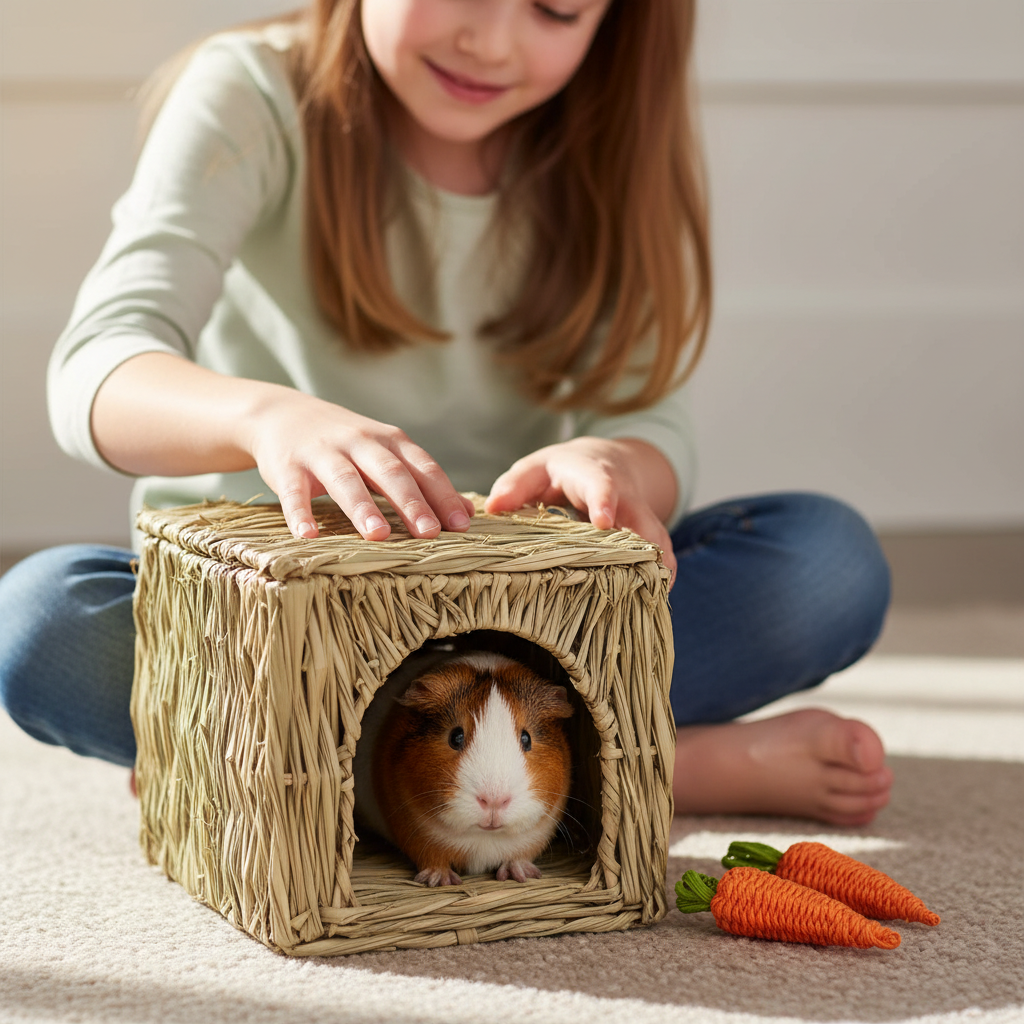
Why guinea pigs need a secure environment
Guinea pigs are naturally cautious animals. Because they are prey animals, their instinct is to stay alert, hide quickly, and avoid anything that feels unpredictable.
When their space feels too open, noisy or exposed, they may become withdrawn, nervous or unsettled. A calm setup can make a remarkable difference to how quickly they start eating, resting and exploring normally.
- Helps reduce stress and nervous behaviour
- Encourages rest, confidence and normal daily habits
- Makes feeding, hiding and exploring feel safer

Always provide a proper hideout
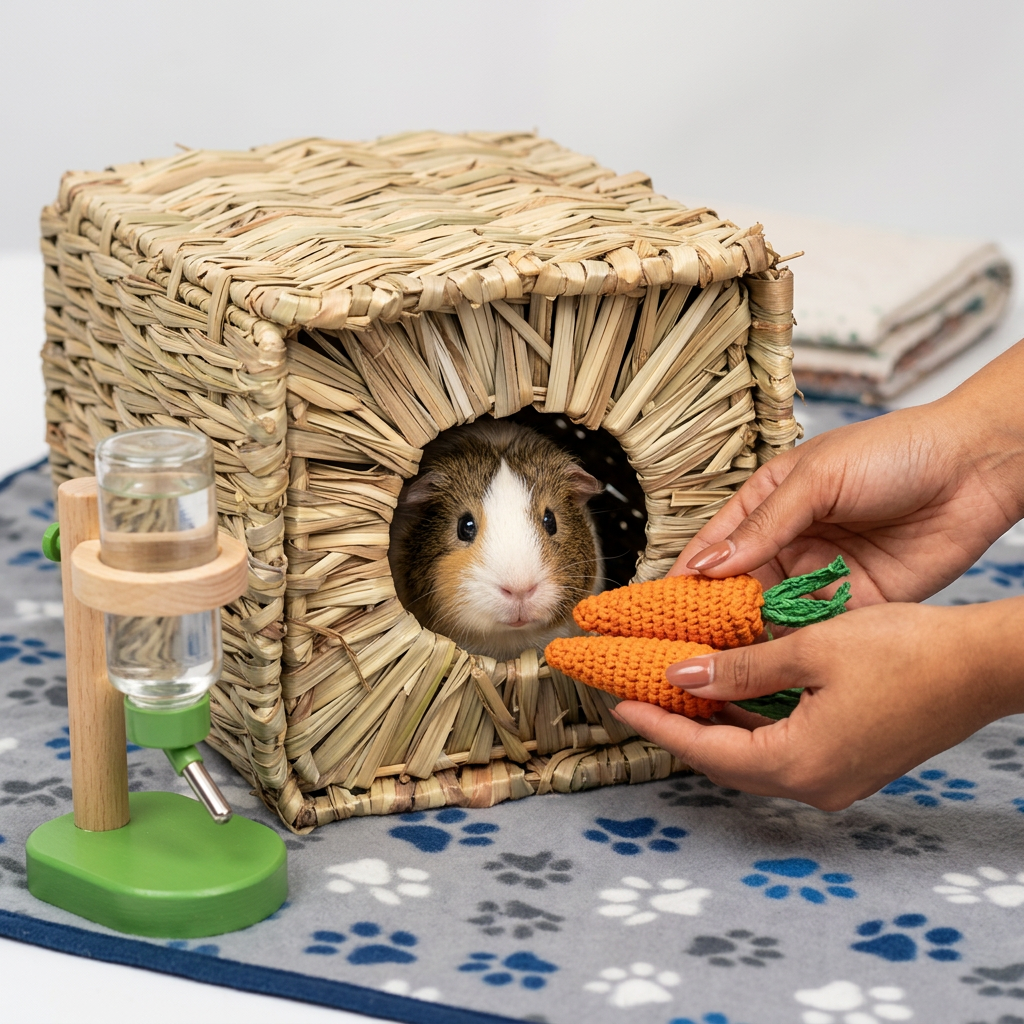
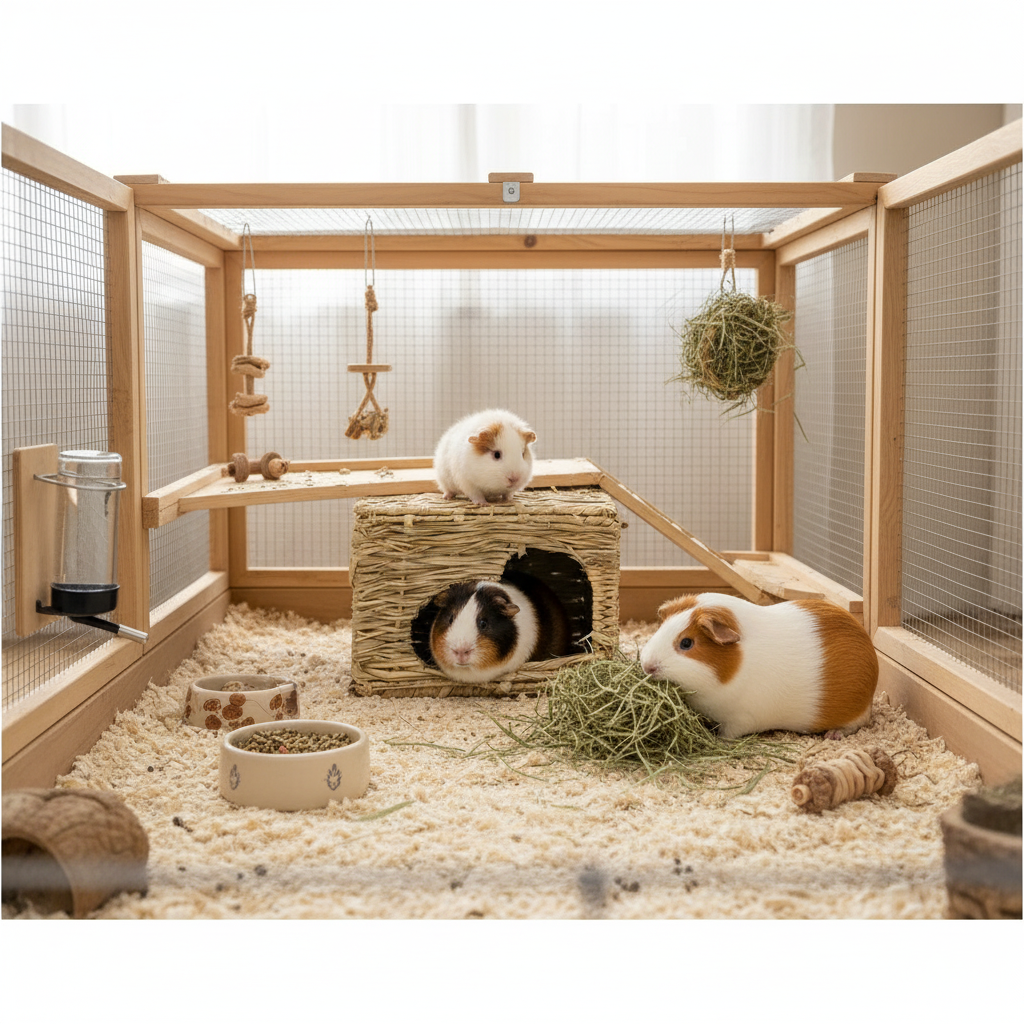
The most important part of a guinea pig setup is a place to retreat to. A good hideout gives them a defined area where they can rest, feel enclosed and switch off.
This is especially helpful when they are settling into a new home, reacting to noise, or simply wanting a private place to relax during the day.
- Choose a hideout that feels enclosed and stable
- Make sure there is enough room to turn around comfortably
- Place it somewhere calm and easy for them to access
Use natural, chew-safe materials
Guinea pigs need suitable materials to gnaw. This keeps them occupied and supports their daily routine.
Textures such as seagrass, hay-based accessories and chew-safe fibres can make their space more engaging.
You do not need to overcrowd the enclosure. A few well-chosen natural items usually work better than lots of random extras.
Inspect hideouts and toys often so you can replace worn pieces when needed.
Create a calm, organised layout
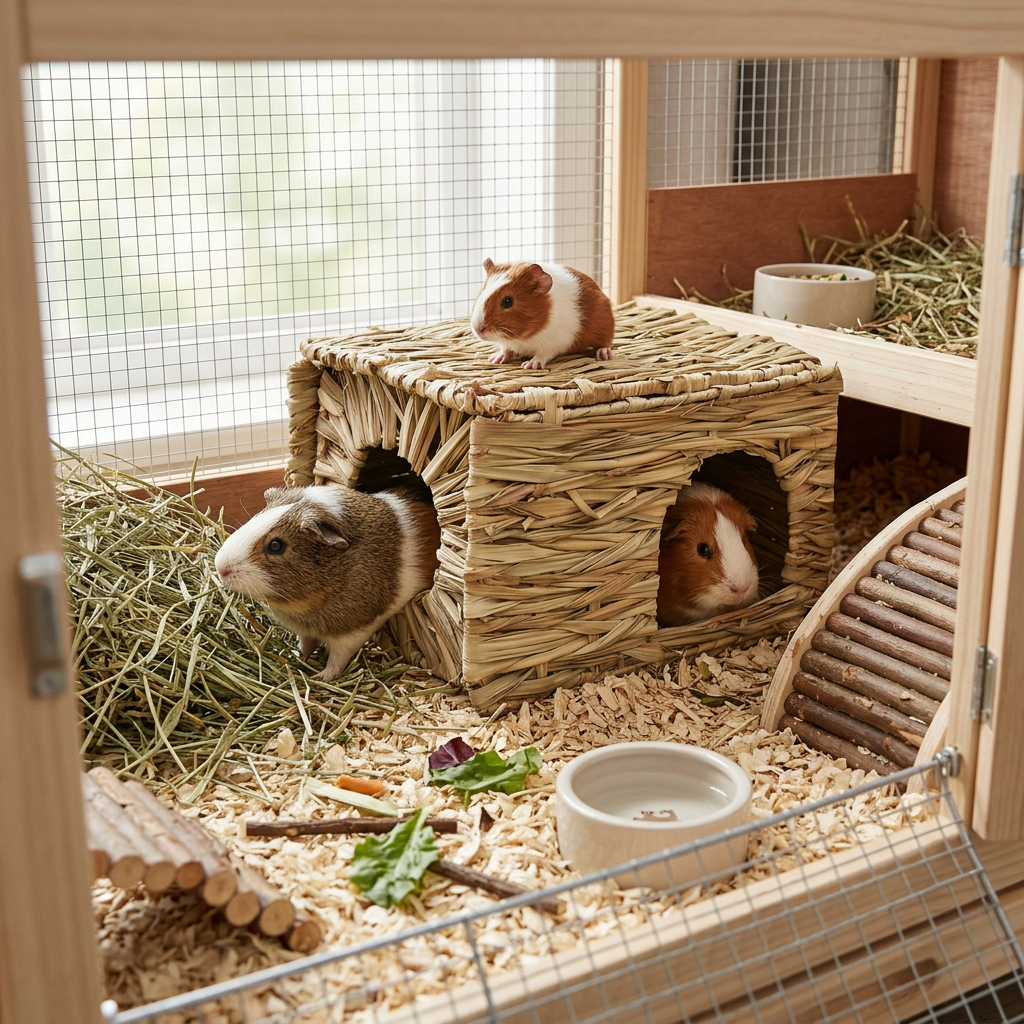
Guinea pigs do best when their home feels predictable. Try to keep the layout practical and easy to understand, with clear areas for resting, eating and moving around.
- Keep food, water and the hideout easy to reach
- Avoid placing the enclosure in a loud, high-traffic part of the home
- Give them enough open floor space as well as places to shelter
- Limit sudden changes unless really necessary
Build trust slowly and consistently
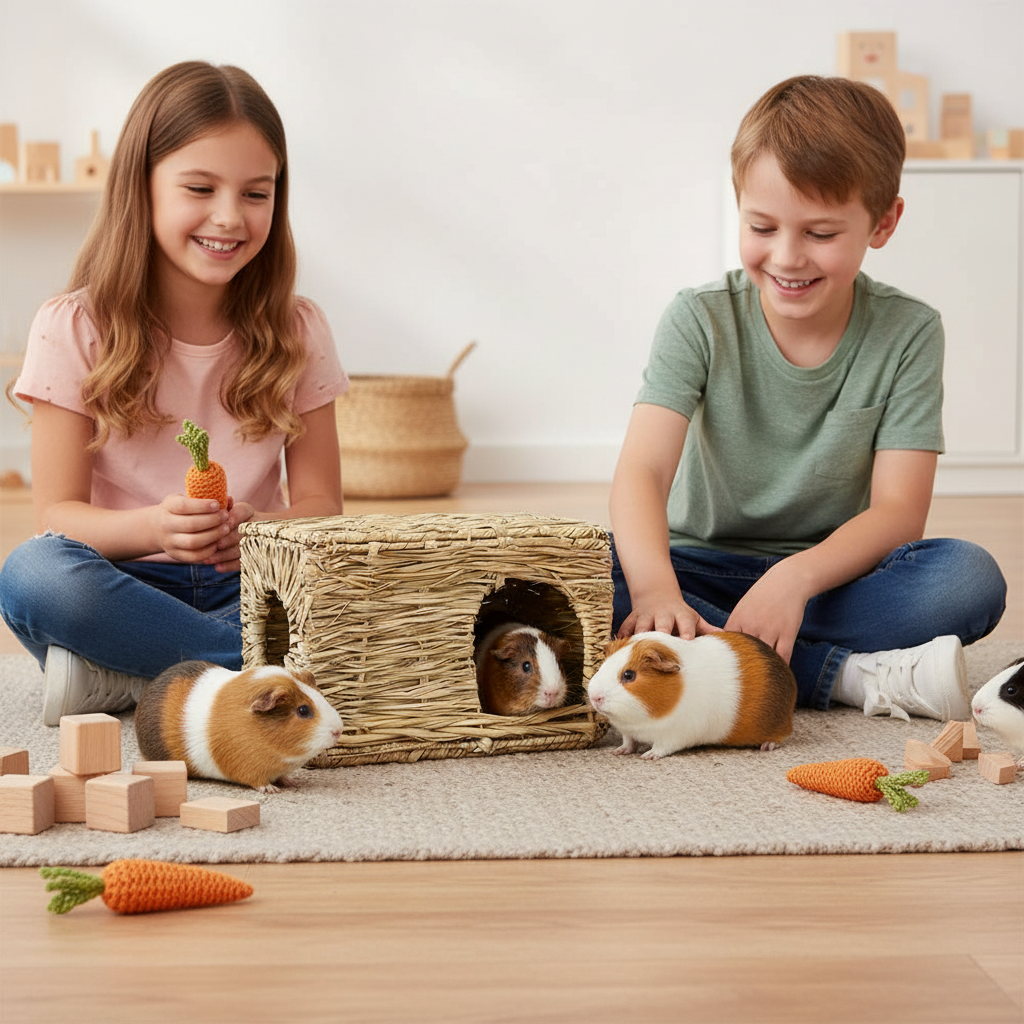
Even with a lovely setup, confidence takes time. Move slowly, keep handling calm, and let your guinea pig learn that their environment is safe.
- Approach quietly and avoid sudden movements
- Give them time to settle before expecting too much interaction
- Use routine to make daily care feel predictable
- Look for small signs of progress such as more exploring and relaxed resting
Common setup mistakes that can increase stress
Too much exposure
Large open spaces without a hideout can make guinea pigs feel vulnerable and reluctant to settle.
Too many random items
Overcrowding the enclosure may look busy, but it can make movement awkward and create unnecessary stress.
Constant changes
Moving things around too often can disrupt their confidence and make their home feel unpredictable again.
A natural hideout that covers several needs at once
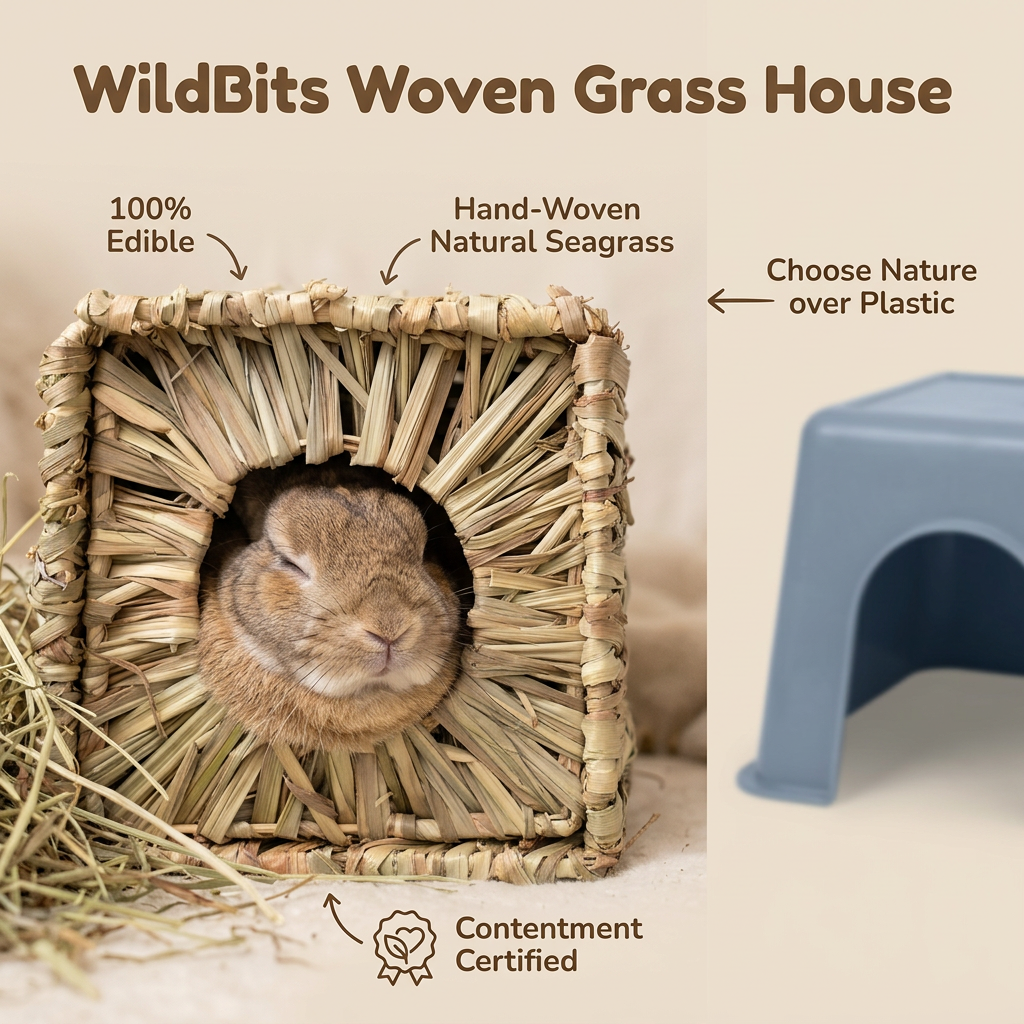
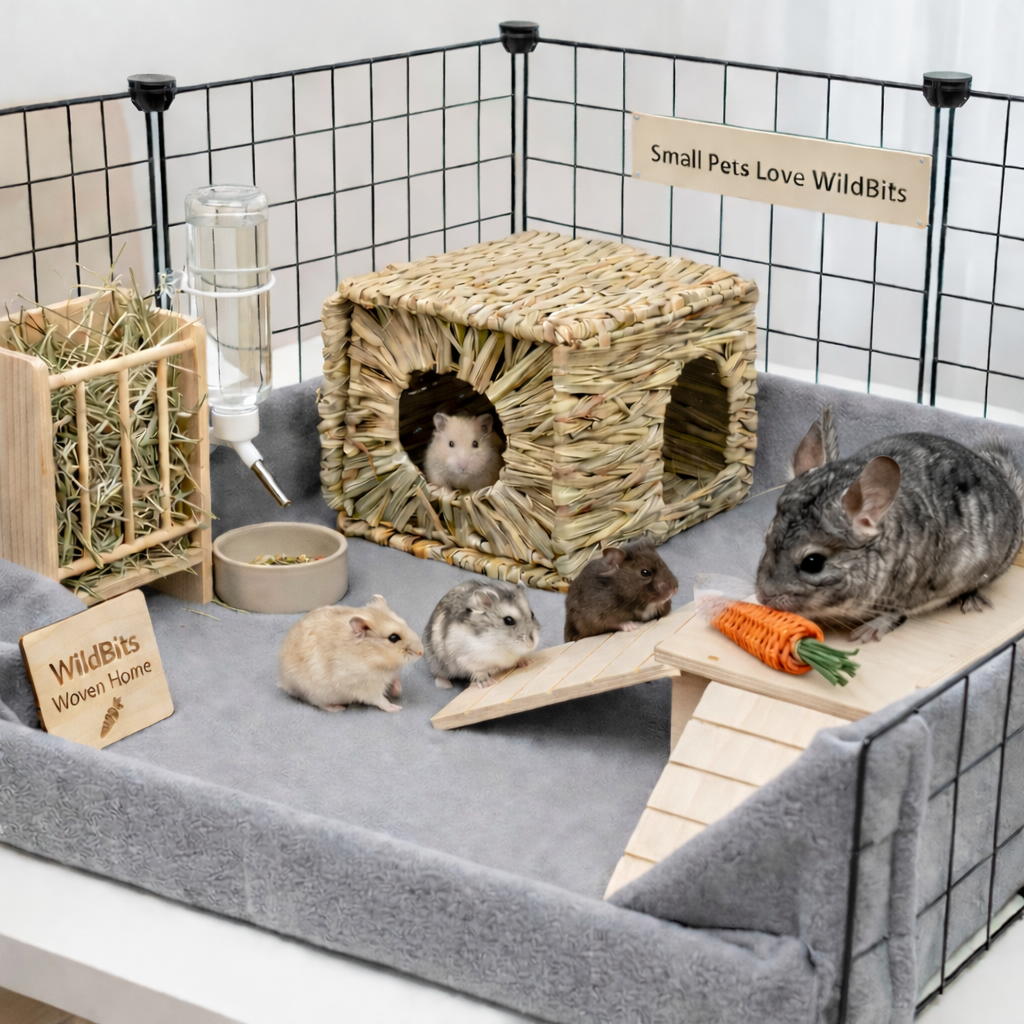
Gives guinea pigs a calm space to hide, rest and settle.
A softer, more inviting alternative to many hard plastic shelters.
Adds enrichment and supports natural gnawing behaviour.
Works well in practical cage layouts without making the space feel cluttered.
Convenient if you want a spare house ready to use.
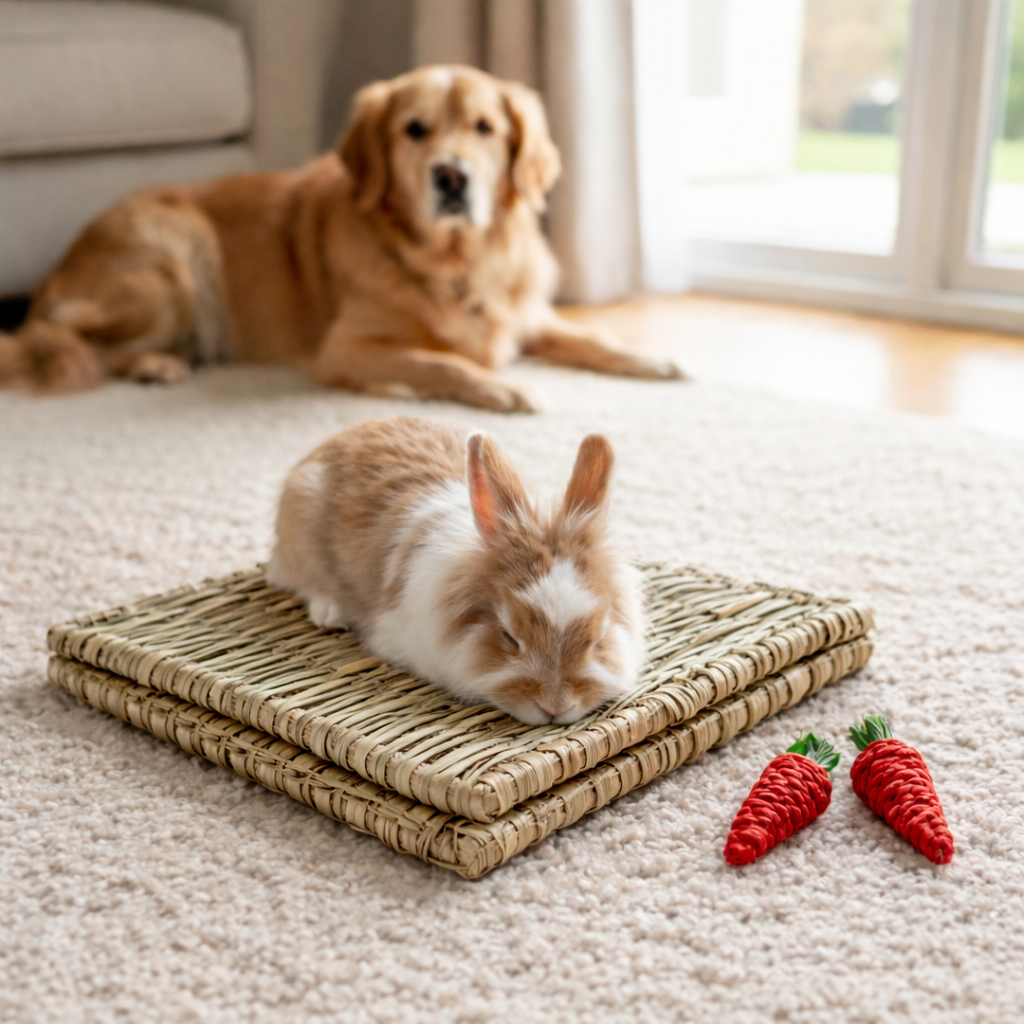
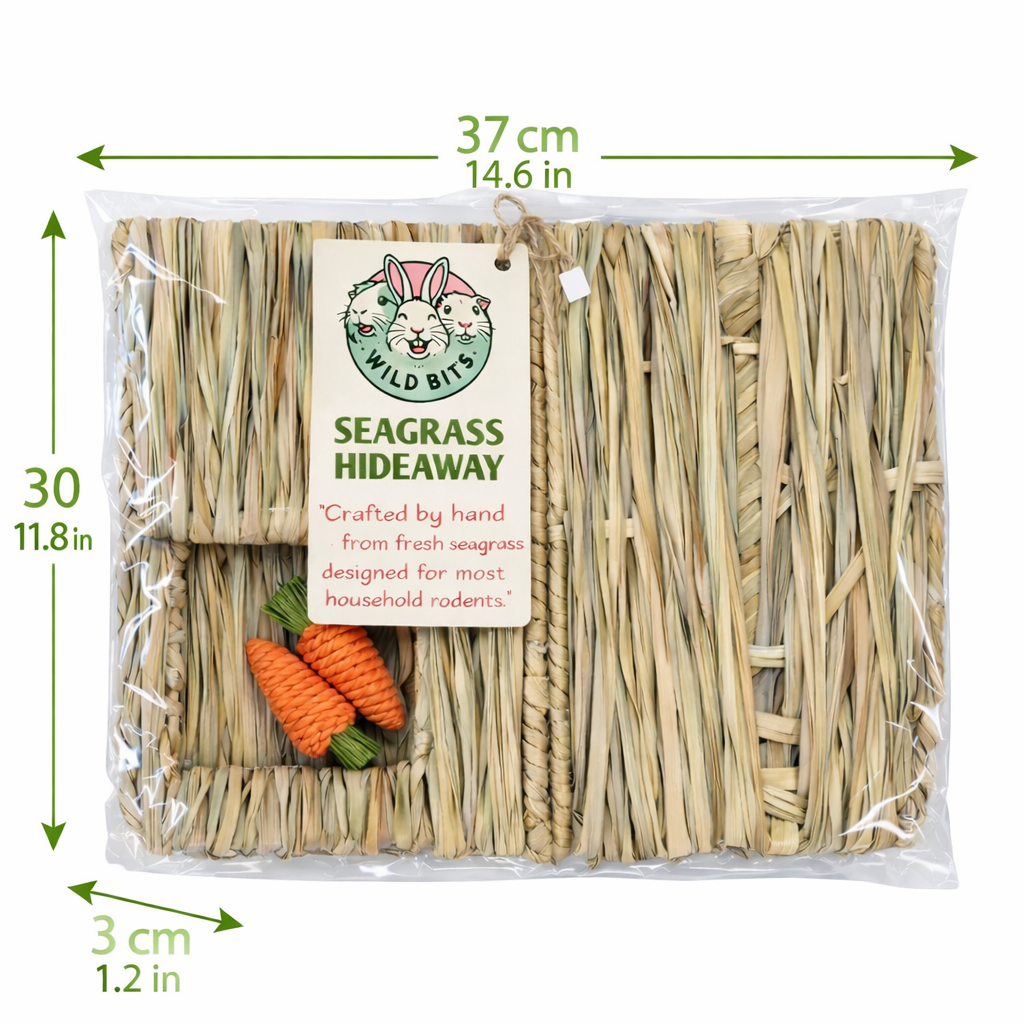
Size, storage and setup visuals
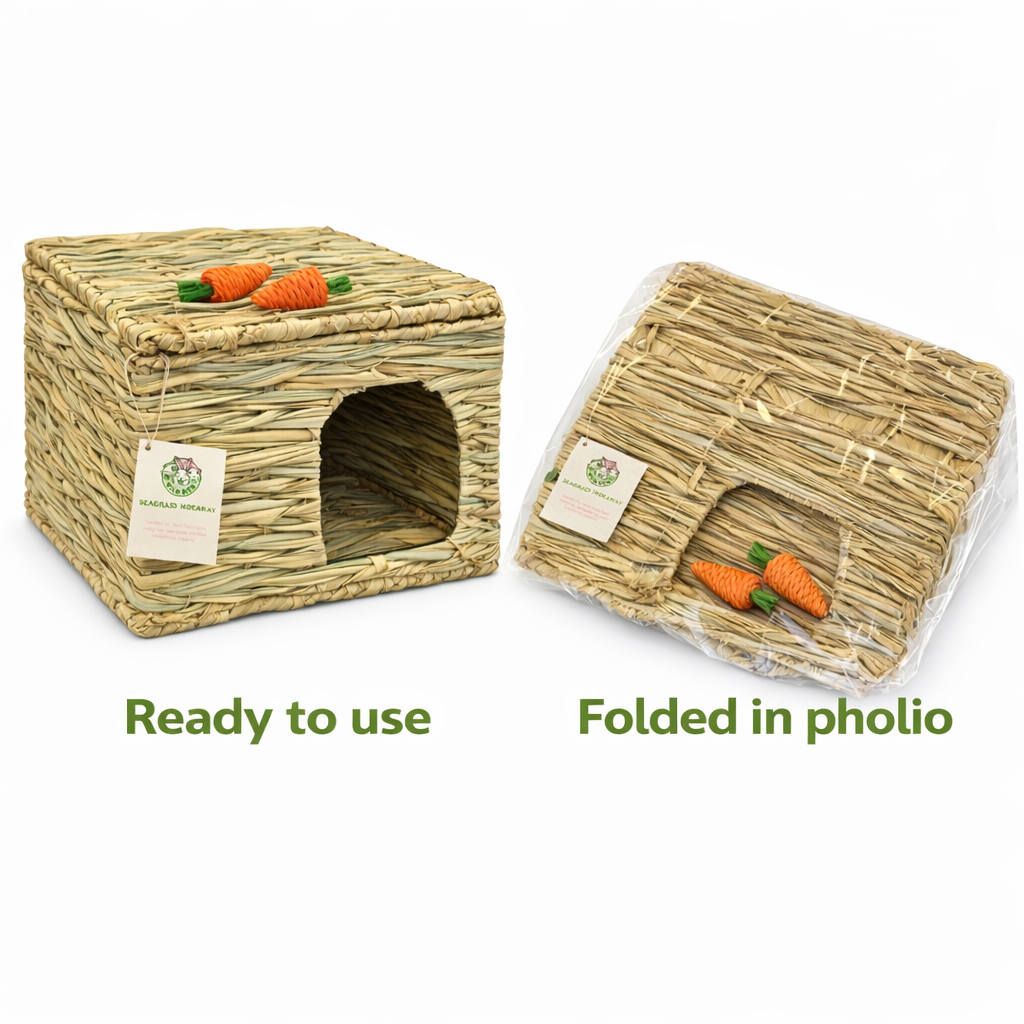
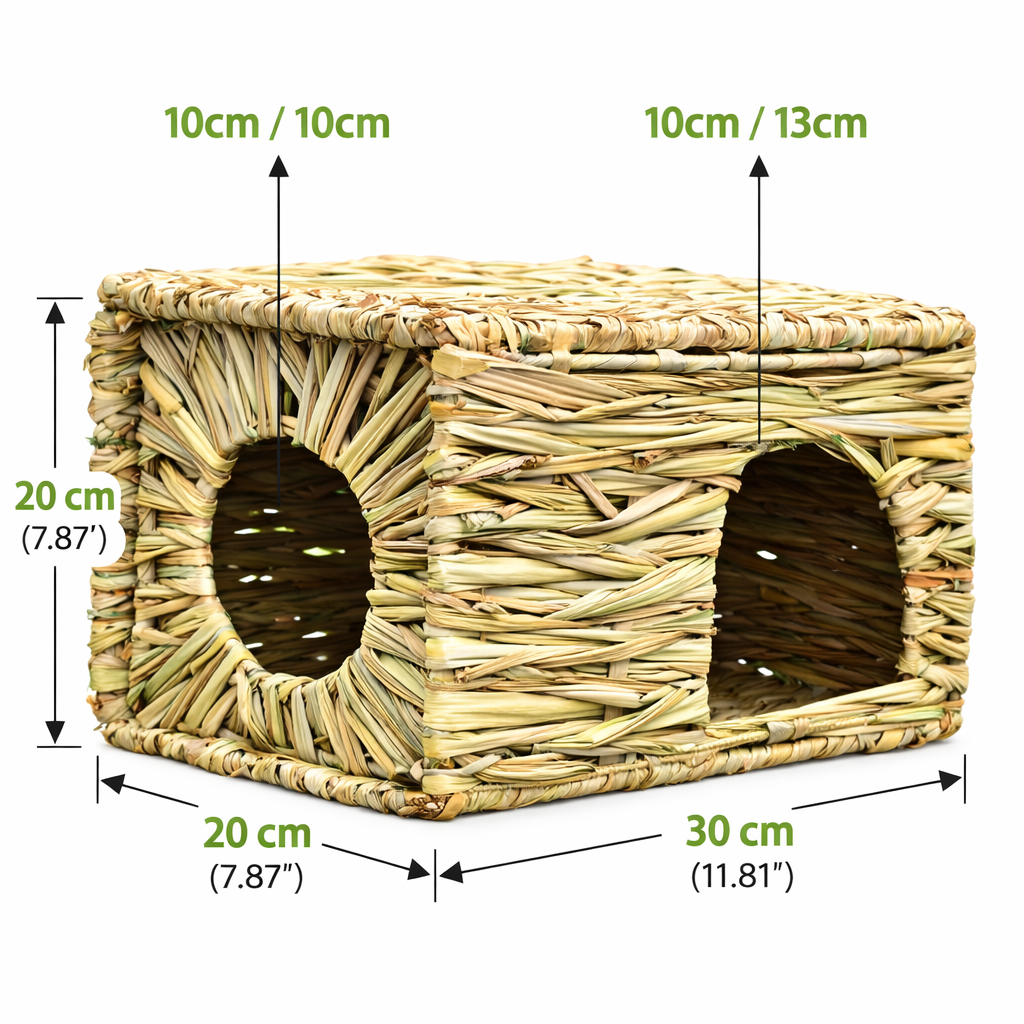
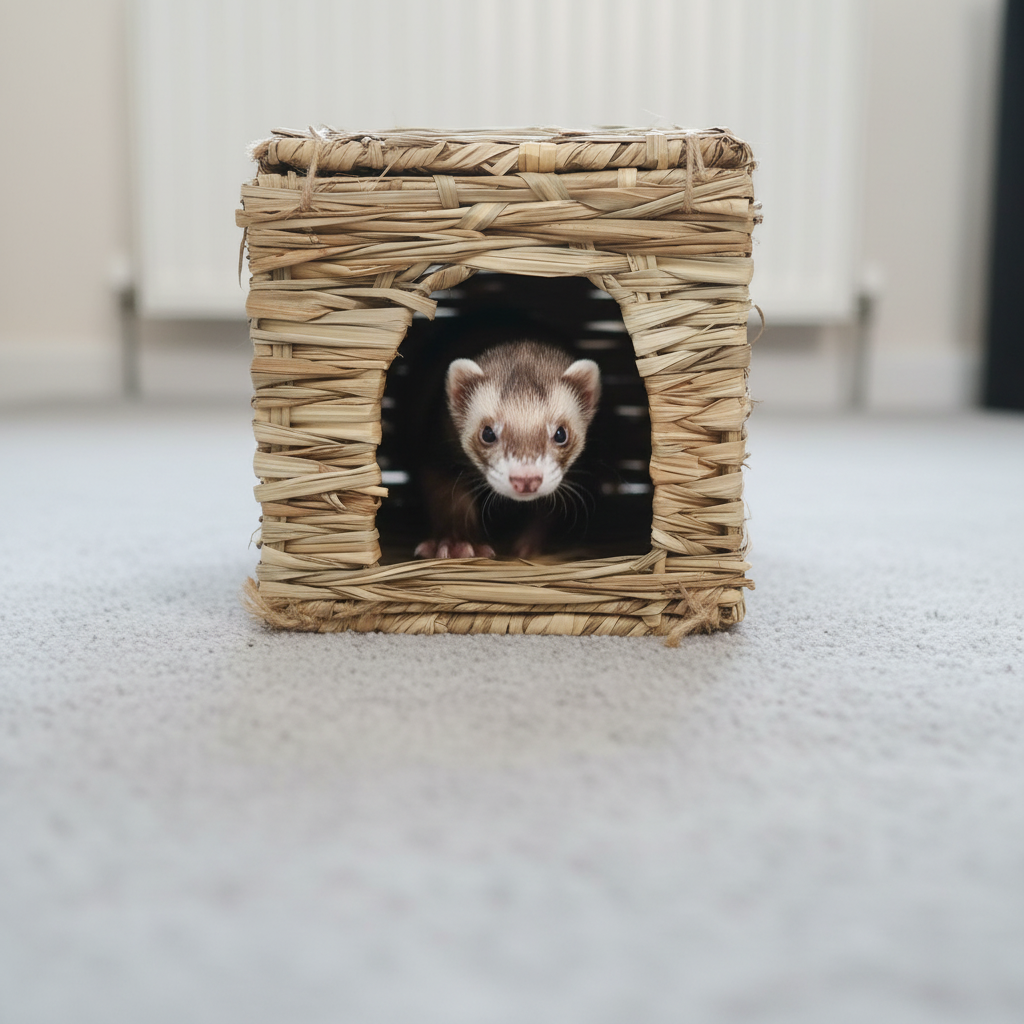
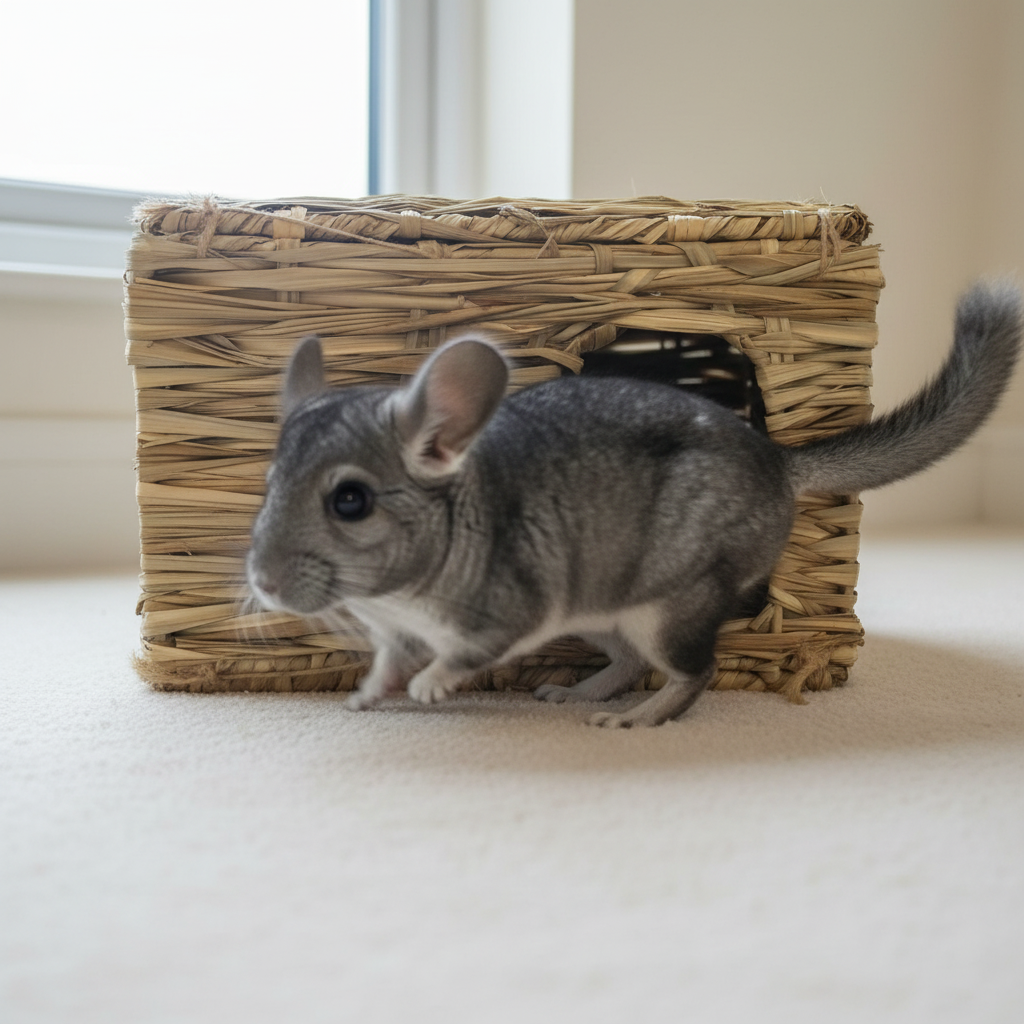
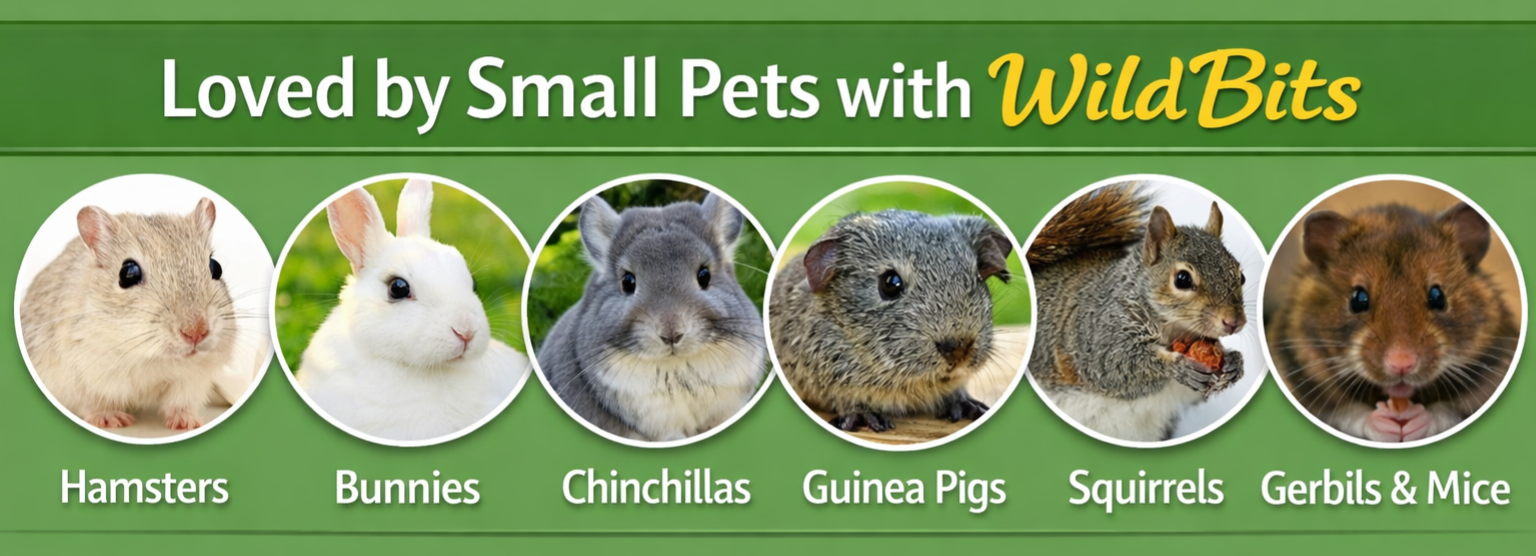
How other small pets use this style of hideout
Simple changes can make a big difference
A secure hideout, natural materials, and a calm setup can help your guinea pig feel more settled, more comfortable and more at home. If you would like an easy starting point, you can view the WildBits natural house below.
This extended guide uses your WildBits image links alongside the main guide structure.